




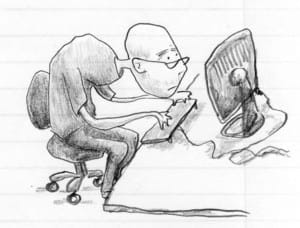
A great number of people suffer from the negative effects of bad posture and yet do not change the factors in their lives that cause the problem. In today’s post, Chartered Physiotherapist Sinéad Treacy of our Dundrum clinic discusses postural problems, how they occur, and how they can be resolved.
Postural dysfunction, or “poor” posture, is when the spine is positioned unnaturally and its curves are overly emphasised. This places the joints, muscles and vertebrae under stress. Over time, prolonged poor positioning results in pressure building up in these tissues.
Painful conditions associated with poor posture are very common, and most people have some firsthand knowledge of them. Low back pain is the most frequent complaint, but research shows that neck, shoulder and arm pain have also become increasingly widespread as a result of postural dysfunction. Foot and knee problems are also becoming more common due to the increased emphasis on running and fitness.
Symptoms of postural dysfunction may include both painful and visible signs.
Painful Symptoms from Bad Posture
- Upper or lower back pain
- Neck, shoulder and arm pain
- Lower limb pain, including pain in the hip, knee or ankle
- Muscle fatigue
- Headaches caused by a build-up of tension in the upper back, neck and shoulders
Visible Symptoms
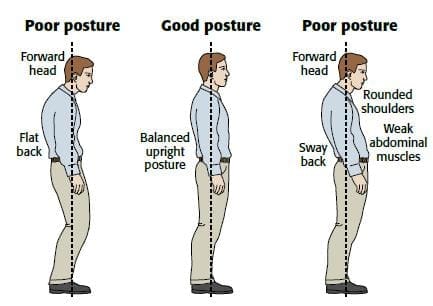
(See the diagram below for examples.)
- Poor posture: slouching, rounded shoulders, hunchback, head tilted forward, bent knees.
- Good posture: balanced upright posture with a straight line from the ear to the shoulder to the hip.
- Poor posture: shoulder blades pulled excessively back, arching of the lower back, locked knees, pot belly.
Contributing Factors to Postural Dysfunction
- Lack of education or awareness of correct posture
- Sedentary lifestyle
- Occupational demands
- Joint stiffness
- Decreased fitness
- Muscle weakness
- Muscle tightness
- Poor core stability
- Poor ergonomic workstations
Physiotherapy Treatment of Bad Posture
Physiotherapy treatment may significantly help to minimise, if not eliminate, postural dysfunction. Most patients will experience decreased pain once their posture is corrected.
Physiotherapy Treatment May Include
- Assessment and diagnosis of postural habits
- Postural education and training
- Manual therapy and soft tissue massage
- Dry needling
- Postural taping
- Electrotherapy
- Joint mobilisation
- Corrective exercises and movements to improve flexibility, strength and posture
- Activity modification advice
- Advice regarding ergonomic workstations
- Pilates exercises
Does any of the above sound familiar to you? Are you experiencing any of these symptoms? Don’t suffer from bad posture any longer when you can start addressing it today with help from one of our physiotherapists. Book an appointment with us today and stop wasting any more time slouched over your desk at work.